News content
A distributor replaces mercury tubes with UV LED tubes in a chain of restaurant kitchens. Two months later the complaints arrive — not about catch rate, but about a cold, unfamiliar light. Meanwhile, at the client's farm, the tubes are catching well but the plastic housings keep cracking during cleaning. Two sites, two different problems, one root cause: the tube was chosen for the enclosure, not for the application.
1. Two Spectra, One Trade-Off
Tianhui's trap tubes are built around two optical recipes:
- Single-band 365nm concentrates nearly all output in one narrow band near the phototaxis peak of many flying insects. Peak wavelength is specified at 360–370nm, emission angle 120°, and radiation illuminance reaches ≥23 µW/cm² at 1m on the 5W tube and ≥55 µW/cm² at 1m on the 10W tube.
- Dual-band 365+395nm uses dual-chip 2835 beads to mix two peaks — 360–370nm and 390–400nm — producing a broader, warmer glow much closer to the familiar mercury violet, at an emission angle of 270°.
The trade-off is honest and unavoidable: on the 7W dual-band tube, radiation illuminance is specified at ≥8 µW/cm² at 1m, lower than the single-band 5W. Energy spread across two bands and a wider emission angle is energy not concentrated at one peak. Mixing buys appearance; it costs peak intensity.
2. Matching the Tube to the Site
3. What the Power and Length Numbers Actually Mean
All three run on AC100–240V, 50/60Hz, and fit a standard G13 holder — a drop-in replacement path for legacy fixtures.
4. Built for the Site, Not the Lab
The shatterproof versions use an all-plastic milky-white PC tube over an aluminium substrate with a built-in non-isolated constant-current driver — no external ballast to fail, and no glass to break during washdown. Flame retardancy is UL94V-0, surge withstand is 2.0–2.5KV, and all models are RoHS compliant, rated for −20°C to +50°C and 10–90% RH.
Conclusion
Choose the spectrum from the site, not the catalogue: single-band 365nm where concentrated output matters, dual-band where the customer expects the familiar violet. Then match the wattage to the enclosure volume. Specify by site, and the second-season complaint — the one about colour or cracked housings — never happens.
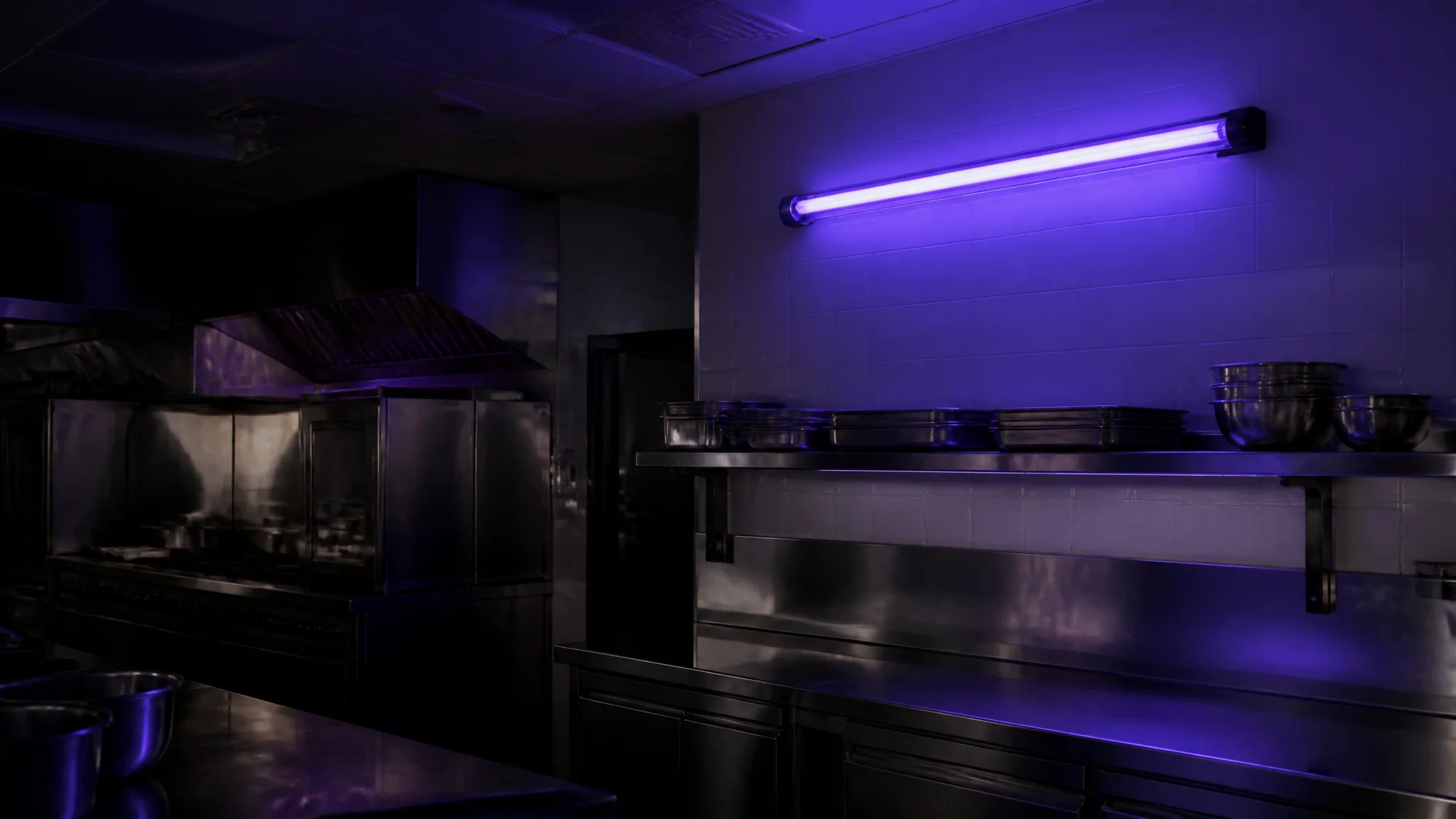 Figure 1 — Commercial kitchen installation: single-band 365nm T8 tube in a wall-mounted insect trap.
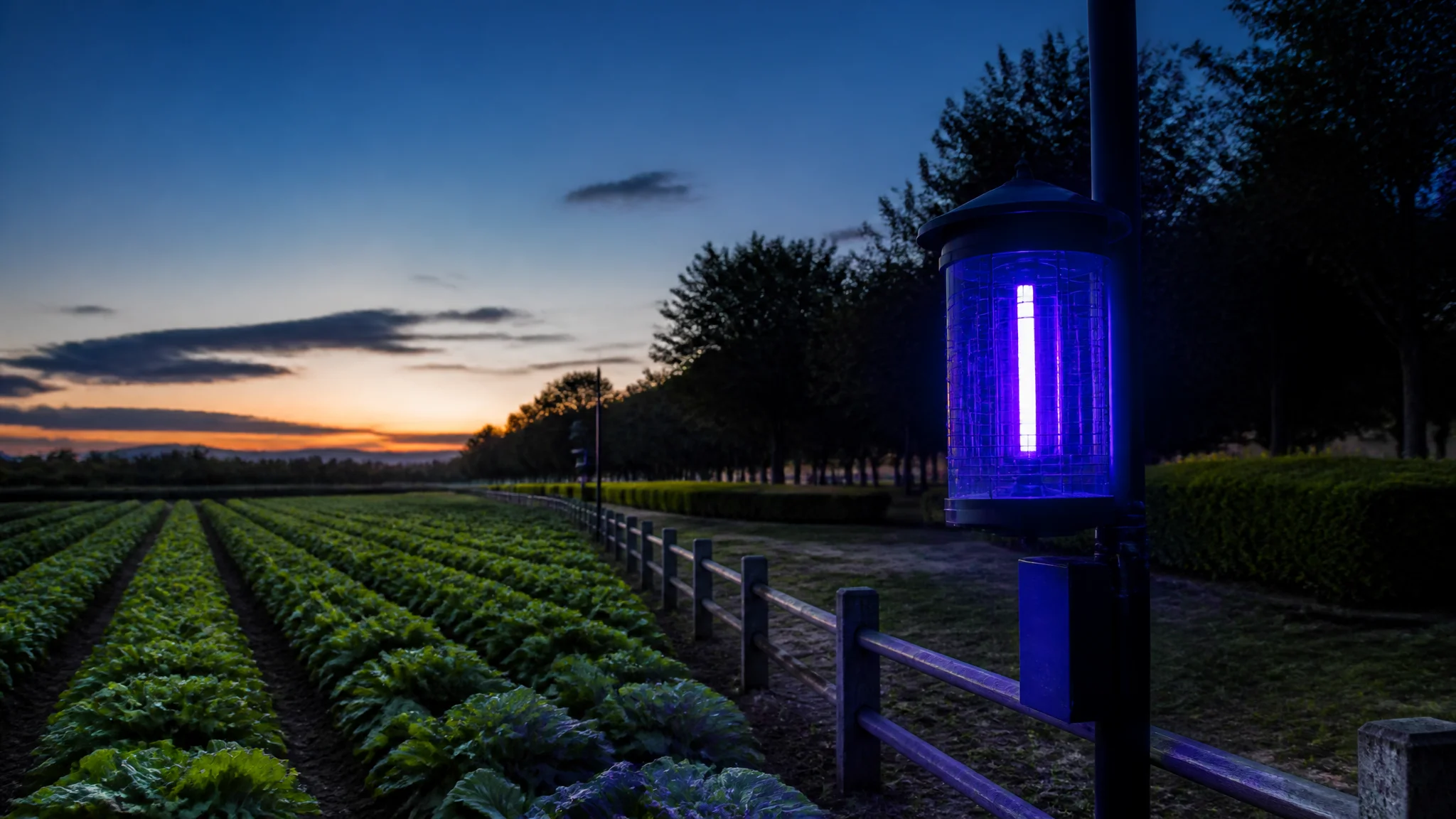 Figure 2 — Farm and park boundary: dual-band tube in a protective outdoor trap hou